Why Waterproofing Deserves More Attention Than It Gets
Most homeowners focus on tiles, fixtures, and layout when planning a bathroom renovation. Waterproofing rarely comes up in early conversations, yet it sits beneath everything and determines whether the renovation holds up over time.
Every bathroom is exposed to moisture, but waterproofing has to deal with more than everyday humidity. Shower spray, steam, floor waste, pipe penetrations, movement at wall and floor junctions, and moisture trapped behind tiles all place pressure on the membrane system over time. In Brisbane’s warmer, humid periods, poor ventilation can make moisture problems worse, but the real issue is whether the waterproofing has been applied correctly before the tiles go down.
What Queensland Law Actually Requires
Waterproofing in Queensland is classified as a licensed trade. Only contractors holding the appropriate licence can legally carry out this work, and the membrane must be applied to specific standards before tiling begins.
This is not a technicality that gets overlooked on inspections. The licensing requirements for waterproofing in Queensland are enforceable, and unlicensed work can void your home insurance and create serious liability issues if the property is ever sold.
Any reputable bathroom renovation contractor will hold the relevant licence and carry out waterproofing as a defined, documented stage of the project, not as an afterthought squeezed in between other tasks.
Where Waterproofing Failures Actually Happen
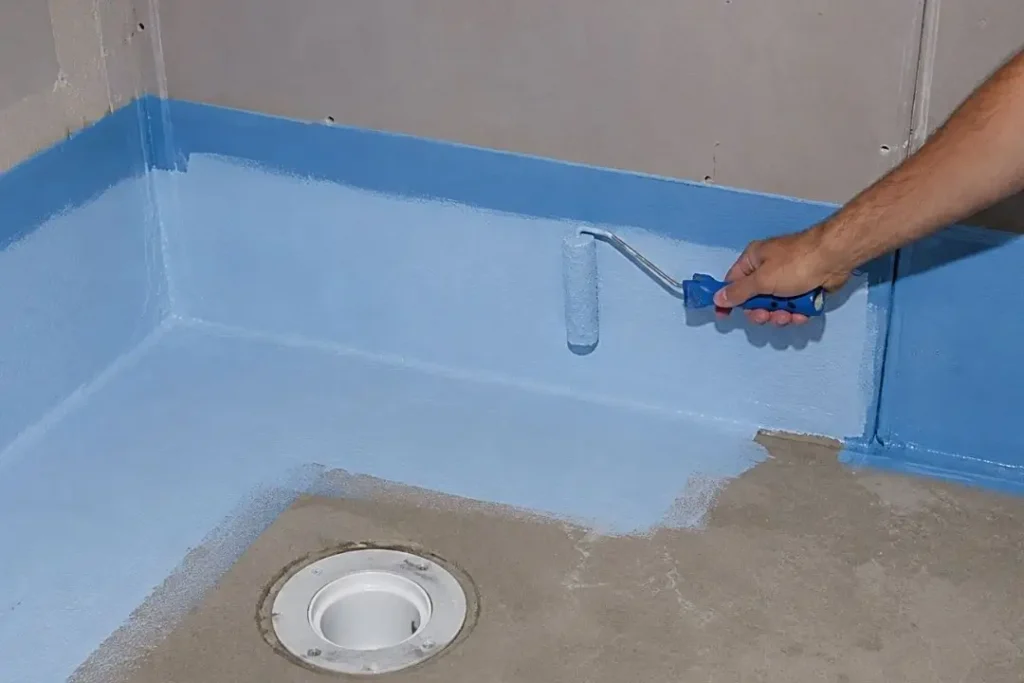
The shower recess is the most obvious area, but it is far from the only one. Wet areas including the floor around the bath, the base of walls, and any penetrations for pipes and drains all require proper membrane coverage.
Failures most often occur at junctions, where the floor meets the wall, around drain flanges, and at internal corners. These are the points where movement in the building structure puts the most stress on the membrane.
A membrane that looks fine on a flat surface can crack at a corner within a few years if it was not applied correctly or if the wrong product was used for that substrate.
The Real Cost of Getting It Wrong
Waterproofing defects are among the most frequently reported building complaints in Queensland, with rectification costs for bathroom claims averaging around $25,000. That figure covers stripping out tiles, removing the failed membrane, reapplying correctly, and retiling from scratch.
The labour and materials for proper waterproofing during the original renovation are a fraction of that cost. Cutting corners at this stage is one of the most expensive decisions a homeowner can make.
If you are comparing quotes and one comes in significantly lower than others, it is worth asking specifically how waterproofing is handled and whether the contractor holds the required licence.
How Waterproofing Fits Into the Renovation Sequence
Waterproofing happens after the substrate is prepared and before any tiling begins. The membrane needs adequate curing time, which means tiling cannot start immediately after application.
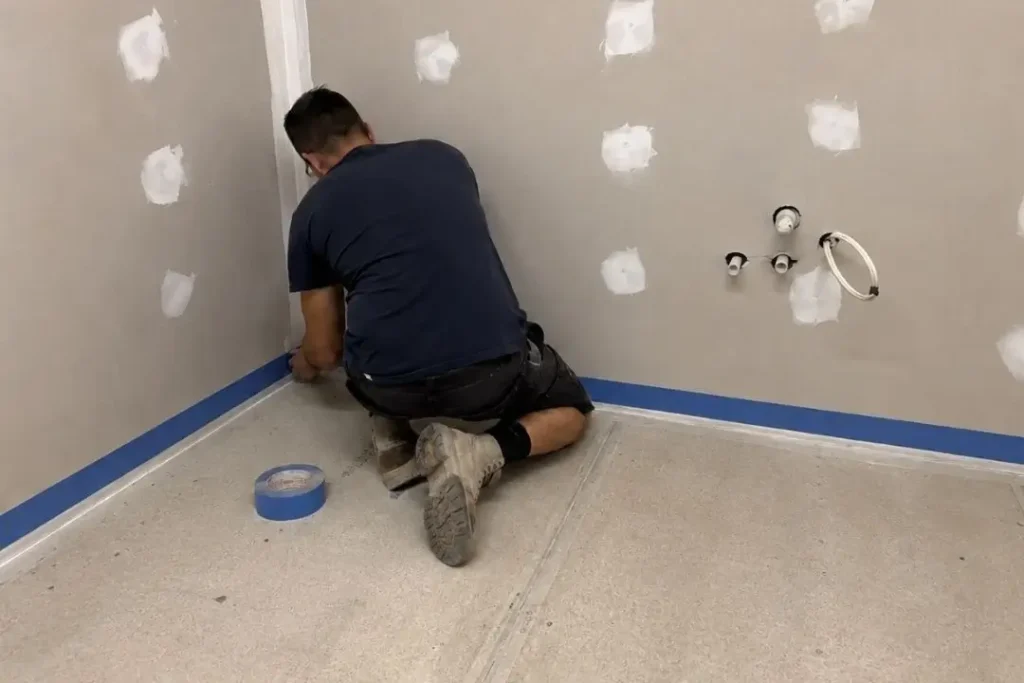
Rushing this stage to save time on the overall schedule is a common source of problems. A properly run renovation builds this curing period into the timeline rather than treating it as a delay.
The membrane must also be inspected before it is covered. Some councils and certifiers require a waterproofing inspection at this stage, and your contractor should be able to confirm what applies to your specific project.
What to Ask Before You Commit to a Contractor
Before signing anything, ask the contractor directly whether they hold a current Queensland waterproofing licence. A straightforward yes, backed by a licence number you can verify, is the only acceptable answer.
Ask how they document the waterproofing stage and whether they carry out a flood test before tiling. A flood test involves filling the shower recess with water and checking for any loss over a set period. It is a standard quality check that licensed contractors should perform as a matter of course.
Also ask whether the waterproofing is done by their own team or subcontracted. Either can be fine, but you should know who is responsible and that the subcontractor also holds the appropriate licence.
How This Affects Your Renovation Budget
Waterproofing is not a large proportion of the overall bathroom renovation cost, but it is one of the stages where skimping creates the most risk. Spending appropriately here protects the rest of your investment.
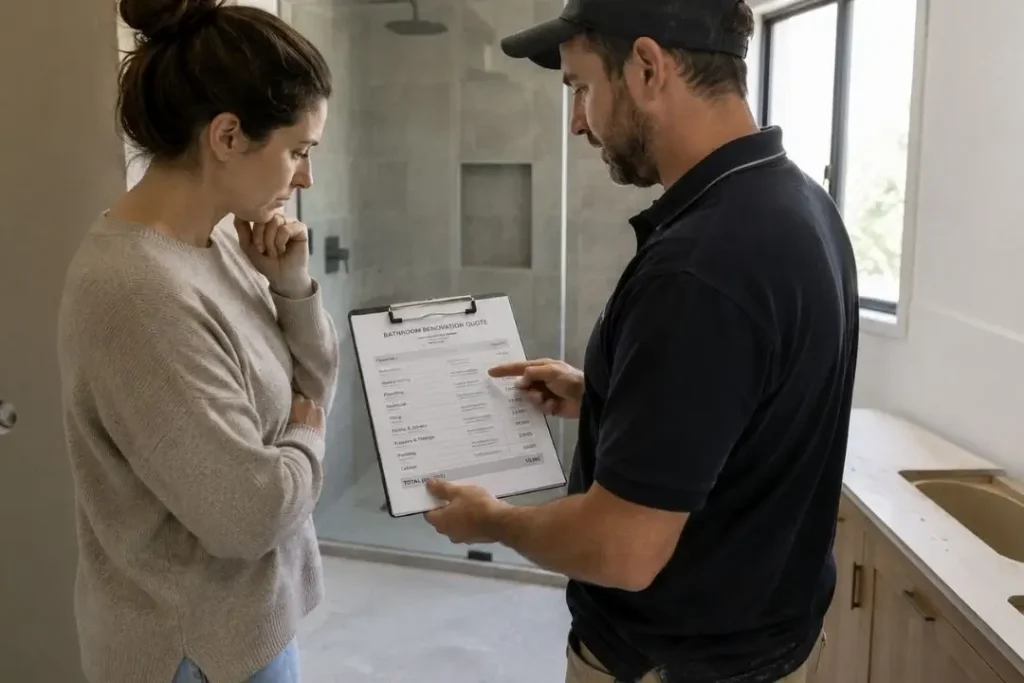
If a quote does not itemise waterproofing as a separate line, ask for it to be broken out. Transparency at this stage reflects how a contractor manages the whole project.
Waterproofing should also be considered in the broader scope of work if you are updating more than one area of the home. For homeowners planning kitchen renovations or laundry renovations alongside a bathroom upgrade, having the licensed trades, plumbing changes, and wet area requirements clearly separated in the quote helps avoid confusion once work begins.
Waterproofing Considerations Across Brisbane Northside
Homes across Brisbane Northside vary considerably in age, construction type, and substrate condition. Older homes may have concrete substrates that need specific preparation before a membrane can be applied, while newer builds often use compressed fibre cement sheeting that requires a compatible product.
Areas like North Lakes include many newer homes, which can involve different substrates, wall linings, and construction details compared with older post-war homes closer to Brisbane. For any bathroom renovation North Lakes homeowners are planning, it is worth confirming the contractor selects a membrane system that suits the actual substrate, not just the suburb.
A contractor familiar with the local building stock will know which products perform best in these conditions and will not apply a one-size-fits-all approach to membrane selection.
What Good Waterproofing Looks Like in Practice
A properly waterproofed bathroom has membrane applied to the full shower recess, including walls to the correct height, the floor, all internal corners reinforced with bond breaker or tape, and all penetrations sealed. The drain flange is integrated into the membrane, not just surrounded by it.
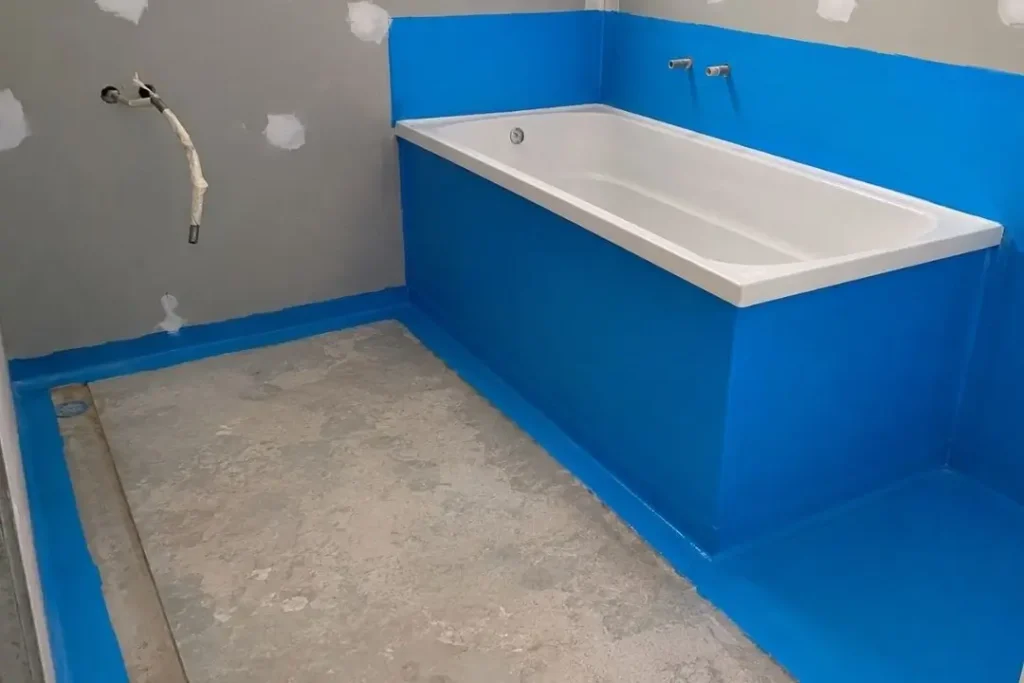
The contractor documents the work, including the product used, the application method, and the curing time observed. This documentation matters if you ever need to make a warranty claim or sell the property.
Working with experienced bathroom builders means this stage is treated as a non-negotiable part of the process, not an optional extra or a box to tick quickly before moving on.
Before Your Renovation Starts
Waterproofing is one of those stages that is invisible once the job is done, which is exactly why it needs to be right before it gets covered up. No amount of quality tiling or premium fixtures will compensate for a membrane that fails in year two or three.
Take the time to understand what your contractor plans to do at this stage, confirm their licensing, and make sure the timeline allows for proper curing. These are simple questions that can save you from a very costly problem later.
Ready to Plan Your Bathroom Renovation?
If you are planning a bathroom renovation on Brisbane’s northside and want to understand exactly how the work will be carried out, our team is happy to walk you through the process before you commit to anything.
Call us on (07) 3184 4592 or send us a message through our renovation enquiry page and we will get back to you for your free quote.